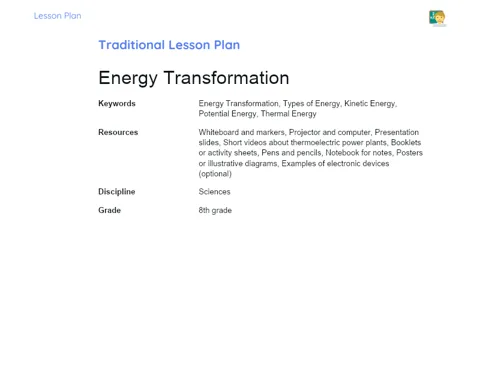
Lesson Plan | Socioemotional Learning | Energy Transformation
| Keywords | Energy Transformation, Thermal Energy, Electrical Energy, Chemical Energy, Thermoelectric Plants, Practical Experiment, Self-Awareness, Self-Control, Responsible Decision Making, Social Skills, Social Awareness, Sociemotional Methodology, RULER, Guided Meditation |
| Required Materials | Battery, Copper Wire, LED Lamp, Tape, Chairs, Space for Meditation |
Objectives
Duration: (10 - 15 minutes)
The purpose of this stage is to provide students with an initial and clear understanding of the topic of energy transformation. Through the identification and recognition of different forms of energy and their transformation processes, students will be able to contextualize their learning in everyday situations, preparing them for more practical and in-depth activities throughout the lesson.
Main Goals
1. Identify different forms of energy and understand the processes of energy transformation.
2. Recognize the importance of energy transformation in daily life, using examples such as thermoelectric plants.
Introduction
Duration: (15 - 20 minutes)
Emotional Warm-up Activity
Guided Meditation for Focus and Concentration
The chosen emotional warm-up activity is Guided Meditation. This technique helps students focus on the present moment, promoting focus and presence in the classroom. Through guided meditation, students will be able to relax and prepare emotionally to learn about energy transformation.
1. Ask the students to sit comfortably in their chairs, with their feet flat on the floor and their hands resting on their laps.
2. Request that they close their eyes and start paying attention to their breathing, inhaling through their nose and exhaling through their mouth.
3. Guide the students to take deep and slow breaths for about 2 minutes, focusing only on the sensation of air entering and leaving their lungs.
4. Then, begin to guide them verbally: 'Imagine that you are in a calm and peaceful place, like a beach or a field. Feel the gentle breeze and listen to the sounds around you. Allow yourself to relax completely.'
5. Continue to guide them for another 5 minutes, suggesting they visualize scenes of serenity and well-being.
6. Conclude by asking them to slowly start moving their fingers and toes, gradually opening their eyes and returning to the classroom with a sense of calm and focus.
Content Contextualization
Energy transformation is a concept present in various situations in our daily lives. For example, when we turn on a light bulb, we are transforming electrical energy into light energy. In thermoelectric plants, the heat generated by burning fossil fuels is transformed into electrical energy, which we use to power our electronic devices. Understanding how these transformations occur allows us to value and utilize energy more consciously and efficiently. Additionally, studying energy transformation enables us to reflect on the environmental impact of different energy sources and the importance of seeking more sustainable alternatives.
Development
Duration: (60 - 75 minutes)
Theoretical Framework
Duration: (20 - 25 minutes)
1. Definition of Energy: Explain that energy is the capacity to do work or cause changes. There are various forms of energy, such as thermal, electrical, chemical, nuclear, and kinetic energy.
2. Types of Energy: Detail the main types of energy: Thermal Energy: Related to the movement of particles in a material. Examples: heat generated by the sun, fire. Electrical Energy: Comes from the movement of electrons. Examples: electricity used in electrical devices. Chemical Energy: Stored in chemical bonds. Examples: batteries, fuels. Nuclear Energy: Released in nuclear reactions. Examples: energy generated in nuclear power plants. Kinetic Energy: Associated with the movement of bodies. Examples: wind, movement of vehicles.
3. Energy Transformation: Explain how energy can be converted from one form to another. For example, in a thermoelectric plant, the chemical energy of fossil fuels is transformed into thermal energy, which is converted into mechanical energy and, finally, into electrical energy.
4. Everyday Examples of Energy Transformation: Provide practical examples to illustrate the concepts: Light bulbs: Electrical energy transformed into light and thermal energy. Cars: Chemical energy of fuel transformed into kinetic energy (motion) and thermal energy (heat). Hydroelectric Plants: Potential energy of accumulated water transformed into kinetic energy and subsequently into electrical energy.
5. Environmental Impact: Discuss the environmental impact of different forms of energy generation, such as pollution caused by thermoelectric plants and the importance of renewable energy sources like solar and wind energy.
Socioemotional Feedback Activity
Duration: (30 - 35 minutes)
Energy Transformation Experiment
In this activity, students will conduct a practical experiment to observe the transformation of chemical energy into electrical and light energy. Using a battery, a copper wire, and an LED lamp, students will build a simple circuit to light up the lamp, demonstrating the transformation of chemical energy into electrical and light energy.
1. Divide the students into groups of 4 to 5 people.
2. Distribute the necessary materials to each group: a battery, copper wire, an LED lamp, and tape.
3. Instruct the students to connect the terminals of the battery to the terminals of the LED lamp using the copper wire, forming a simple circuit.
4. Ask the students to observe and record what happens when the circuit is closed (the lamp should light up).
5. After the experiment, request that each group discusses and records which forms of energy are being transformed during the process.
Group Discussion
After conducting the experiment, gather the students for a group discussion. Use the RULER method to facilitate the discussion about emotions and perceptions during the activity: Recognize: Ask the students how they felt while setting up the circuit and seeing the lamp light up. Were they excited, frustrated, or curious? Understand: Discuss the causes of those emotions. For example, frustration may arise if the circuit didn't work on the first try, and excitement may be linked to the success of the setup. Name: Encourage the students to name the emotions they felt during the activity. Accurately naming emotions helps in self-awareness and self-control. Express: Ask the students to share their emotions appropriately. They can talk about their experiences and how they dealt with the challenges encountered. Regulate: Guide the students on how to regulate their emotions, especially in difficult situations. For example, when feeling frustrated, it's important to take a deep breath and try again calmly.
Conclusion
Duration: (15 - 20 minutes)
Emotional Reflection and Regulation
Suggest that students write a reflection or participate in a group discussion about the challenges faced during the class and how they managed their emotions. They can address how they felt while conducting the experiment, whether they faced difficulties, and how they handled them. Encourage them to write or share a paragraph or two about their experiences, highlighting strategies they used to stay calm and focused.
Objective: The objective of this activity is to encourage students to self-assess their emotions and actions during the class, promoting self-awareness and emotional regulation. Identifying effective strategies for dealing with challenging situations will help students develop self-control and resilience skills applicable in both school and other areas of life.
Closure and A Look Into The Future
To conclude, ask students to set personal and academic goals related to the lesson's content. They can write a list with at least three goals, such as 'better understand different types of energy', 'apply knowledge about energy transformation in future projects', and 'practice emotional regulation techniques during challenging activities.'
Possible Goal Ideas:
1. Better understand different types of energy
2. Apply knowledge about energy transformation in future projects
3. Practice emotional regulation techniques during challenging activities Objective: The objective of this activity is to strengthen students' autonomy by encouraging them to apply their learning practically and continuously. Setting personal and academic goals helps students maintain their focus on academic and personal development, promoting self-management and the application of knowledge in future contexts.