Globalized World | Socioemotional Summary
Objectives
1. Understand the world configuration after the Cold War.
2. Identify and analyze the new political and economic alignments.
3. Comprehend the American influence on the global scenario.
4. Develop socio-emotional skills such as self-knowledge and social awareness.
Contextualization
🌍 Did you know that after the fall of the Berlin Wall in 1989, the world underwent a radical transformation? The old alliances dissolved, and new forces emerged, redefining global geopolitics. Let's explore how these historical events shaped the world we live in today and how American influence extended across various spheres. Get ready for a journey through time and space, understanding the complex dynamics that make our planet such an interconnected and fascinating place! 🚀
Important Topics
Globalization
Globalization is a process that promotes integration among countries, bringing their economies, cultures, and societies closer together. This phenomenon allows for intense circulation of goods, services, people, information, and cultures around the world. Globalization has various impacts, both positive and negative, that affect different regions in distinct ways.
-
Economic Interdependence: The economies of countries have become interdependent, meaning that what happens in one nation can directly impact others around the world. This is clearly seen in global economic crises.
-
Cultural Diffusion: Globalization facilitates cultural exchange, promoting the dissemination of music, movies, fashion, and other cultural aspects. This can lead to cultural hybridization, where elements from different cultures mix.
-
Inequalities: Despite the economic benefits, globalization can also exacerbate regional inequalities. Wealthy countries tend to benefit more while developing nations may face economic and social challenges.
Post-Cold War and New World Order
With the end of the Cold War, the global geopolitical landscape underwent a significant transformation. The fall of the Berlin Wall in 1989 and the collapse of the Soviet Union in 1991 marked the beginning of a new era, where the United States emerged as the world's leading superpower. This reconfiguration of the world order brought with it new political and economic alignments.
-
Fall of the Berlin Wall: In 1989, the fall of the Berlin Wall symbolized the end of the division between the communist and capitalist blocs, marking the start of a new era of cooperation and European integration.
-
Collapse of the Soviet Union: In 1991, the dismantling of the Soviet Union resulted in the emergence of several new independent states and the consolidation of the USA as the main global power.
-
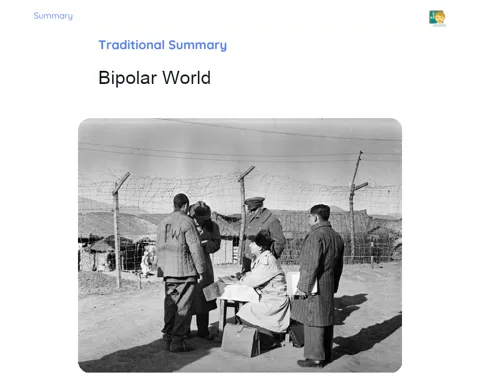
New Unipolar Order: After the Cold War, the world shifted from a bipolar order to a unipolar order, with the USA exerting predominant influence in various spheres, including politics, economy, and culture.
American Influence
The influence of the United States extended considerably after the Cold War, consolidating itself in various areas such as economy, politics, culture, and technology. American cultural and economic hegemony manifested through global brands, media, and international policies.
-
Cultural Hegemony: American culture is disseminated globally through Hollywood films, music, fashion, and lifestyle. This creates a cultural standard that is often adopted by other societies.
-
Economic Dominance: The US economy leads in terms of technological innovation and financial power. American multinational companies, such as Google and Apple, have a significant presence in global markets.
-
International Politics: The USA plays an active role in international organizations and uses its influence to shape global policies, being a key actor in NATO and the UN Security Council.
Key Terms
-
Globalization: Process of global integration in different areas, such as economics, culture, and politics.
-
Post-Cold War: Period after the end of the Cold War, characterized by the reconfiguration of the global geopolitical landscape.
-
New World Order: Global power structure post-Cold War, marked by the hegemony of the United States.
-
Cultural Hegemony: Predominance of one culture over others, influencing habits, behaviors, and values.
-
Regional Inequalities: Economic and social differences between different regions and countries.
To Reflect
-
How does globalization impact your daily life? Think of specific examples, such as access to foreign products or interactions with people from other cultures.
-
Reflect on the economic and social inequalities generated by globalization. How do they affect different countries and social groups?
-
What is your perception of American cultural influence in the world? Do you think this influence is positive, negative, or a mix of both? Why?
Important Conclusions
-
Globalization is a process of world integration that affects all spheres of life, from economy to culture.
-
The post-Cold War period brought a new world order, with the USA emerging as the main superpower and influencing various areas.
-
American influence manifests in economic, cultural, and political aspects, shaping global dynamics.
-
Understanding these changes is crucial to developing a critical analysis of the global scenario and fostering self-knowledge and social awareness.
Impact on Society
👥 Globalization has a direct impact on our day-to-day lives. Think about the products you use daily, such as your smartphone, clothing, and even food. Many of these items are produced and marketed through complex global networks. This facilitates access to a variety of products, but it can also lead to economic inequalities and inadequate working conditions in some parts of the world.
💔 Emotionally, globalization can affect our identities and social relationships. For example, the spread of American culture can influence our tastes, beauty standards, and lifestyles, sometimes causing a feeling of loss of local cultural traditions. It is important to recognize these feelings and understand how global dynamics can affect our perception of ourselves and the world around us.
Dealing with Emotions
🧠 To deal with the emotions related to studying globalization, I propose an exercise based on the RULER method. Take some time to recognize how you feel when learning about global inequalities and cultural influences. Understand that these feelings may stem from a perception of injustice or admiration for cultural diversity. Label these emotions accurately, whether 'frustration', 'curiosity', or 'empathy'. Express these emotions by writing a brief journal entry, drawing, or even discussing with friends or family. Finally, regulate your emotions by practicing breathing techniques or meditation, which help maintain calm and focus.
Study Tips
-
📚 Watch documentaries on globalization to gain a visual and deeper perspective on the topic. Recommendation: 'The Corporation' and 'Capitalism: A Love Story'.
-
🌐 Use online platforms to read international news and understand how global events affect different countries. Try to compare various sources to get a balanced view.
-
📝 Create summaries and concept maps after studying. Visualizing information in an organized way helps improve understanding of complex connections between different themes.